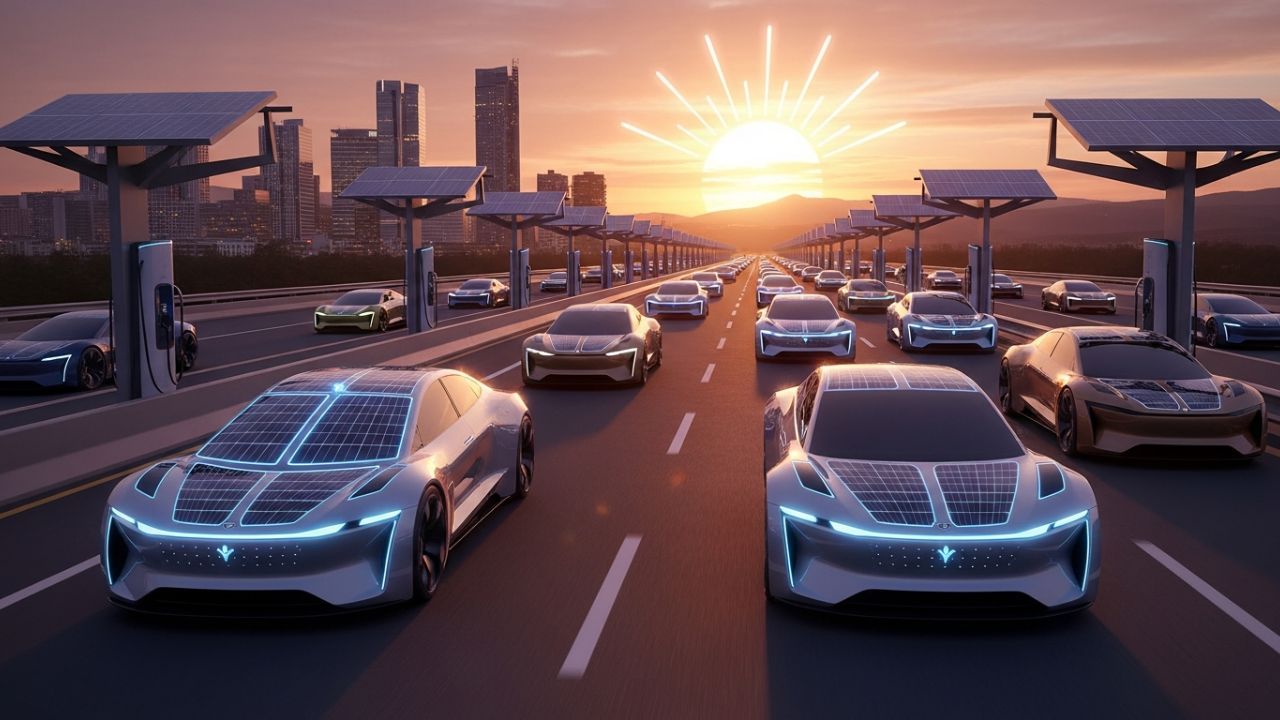
Solar-powered electric cars represent a bold fusion of renewable energy and sustainable mobility, harnessing sunlight to extend range and reduce charging needs. In 2025, with advancements like integrated photovoltaic panels, these vehicles promise up to 40 miles of daily free driving, potentially slashing ownership costs by 30-50% in sunny regions.
Yet, their worth hinges on location, technology maturity, and infrastructure. While ideal for urban commuters in high-sunlight areas like India, challenges such as limited efficiency and high upfront costs raise questions about mainstream viability. This article explores whether solar EVs deliver on their eco-friendly hype.
Evolution of Solar-Powered Electric Cars
The journey of solar-powered electric cars began with experimental prototypes in the 1950s, evolving into viable concepts by the 21st century. Early models, like the 1955 Solar Car from General Motors, were clunky solar-only vehicles limited to low speeds. By the 2010s, hybrids emerged, with companies like Toyota testing solar roofs on Prius models for auxiliary power.
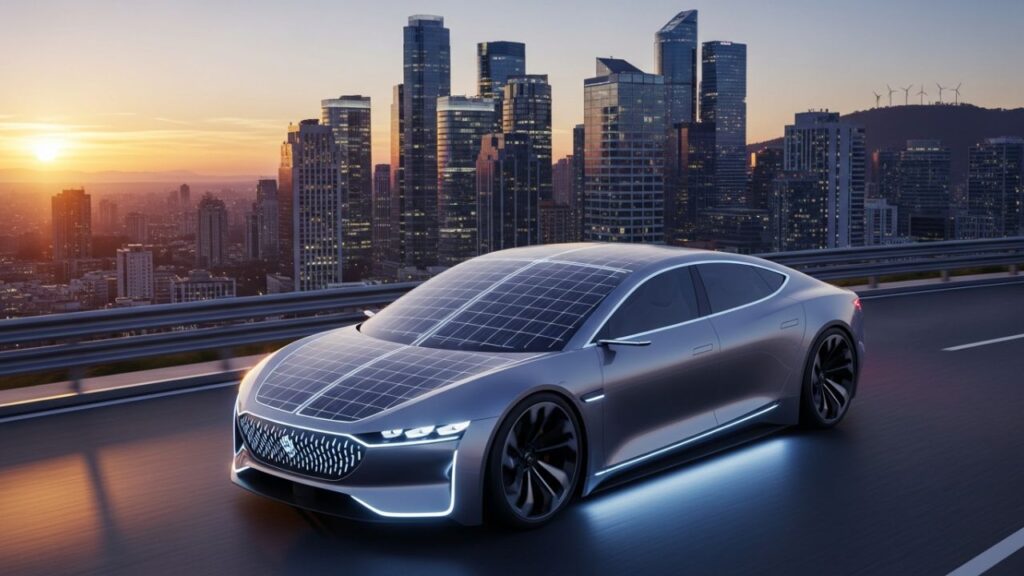
In 2025, the landscape has shifted dramatically. Integrated solar panels on EV bodies now generate 400-700 watts, adding meaningful range without external charging. This evolution aligns with global pushes for net-zero emissions, where solar EVs bridge battery limitations and fossil fuel dependency. In India, where solar irradiance averages 5 kWh/m² daily, such tech gains traction amid EV subsidies.
Key milestones include the 2017 Sion by Sono Motors, which crowdsourced solar tech, and Aptera’s 2021 relaunch aiming for production. Regulatory support, like EU’s Green Deal and India’s FAME-III scheme, accelerates adoption, projecting solar vehicle market growth to $2.87 billion by 2035 at 17.69% CAGR.
Read Also: Car Loan Refinancing Explained – How to Lower Your Monthly Payments
How Solar Integration Works in EVs
Solar integration in EVs uses photovoltaic (PV) cells embedded in vehicle surfaces—roofs, hoods, and even windows—to convert sunlight into electricity. This charges the battery directly, supplementing grid or regenerative braking power. Advanced maximum power point tracking (MPPT) circuits optimize output, ensuring 20-40% efficiency in real-world conditions.
The process starts with flexible, lightweight panels made from perovskite or silicon cells, weighing under 5 kg for 3m² coverage. Energy flows to a DC-DC converter, feeding the high-voltage battery at 400V. In sunny climates, this yields 10-40 miles daily, ideal for short commutes. For instance, Aptera’s 700W array captures enough for 40 miles in Southern California sun.
In EVs, software manages solar input, prioritizing battery health by limiting charge rates. Hybrid systems combine solar with V2G (vehicle-to-grid) tech, allowing excess energy to power homes. However, output drops in shade or clouds, making it supplementary rather than primary. Innovations like transparent solar glass from Ubiquitous Energy enhance integration without altering aesthetics.
India’s Vayve Eva exemplifies this: its roof panel adds 30-70 km range, leveraging the country’s abundant sunlight for affordable city driving. Overall, solar boosts efficiency to 10 miles per kWh—four times typical EVs—reducing energy draw from the grid.
Key Players and Models in the Market
Several innovators lead the solar EV charge, blending niche designs with practical applications. Aptera Motors’ three-wheeled solar EV, unveiled at CES 2025, features 700W panels for 400-mile total range, with 40 miles solar-only. Priced at $33,000 base, it’s targeting eco-enthusiasts in sunny U.S. states, promising production by late 2025.
Sono Motors’ revived Sion, after bankruptcy restructuring, offers 120 solar cells generating 112W, adding 20-30 miles daily. At €25,000 in Europe, it emphasizes community-owned solar sharing. Lightyear’s One, a four-seater with 5m² panels, claims 70km solar range but scaled back to fleets post-2023 delays.
In India, Vayve Mobility’s Eva, launched at ₹3.25 lakh in 2025, is the first solar city car. Seating three, it delivers 250km total range with solar boost for urban use, including a battery rental model at ₹1/km. Squad Mobility’s solar quadricycle, planned for 2026 EU production, focuses on shared urban fleets with 100km range.
These models highlight a market split: ultra-efficient niches like Aptera versus affordable locals like Eva. Global players like Hyundai test solar Prius variants, while Chinese firms like Hanergy integrate panels into SUVs for export. Adoption varies, with India projecting 10,000 solar EVs by 2027 via subsidies.
Technological Advancements Driving Adoption
Advancements in solar PV efficiency have propelled solar EVs from prototypes to prospects. Perovskite-silicon tandems now hit 30% conversion rates, up from 20% in 2020, enabling compact panels with higher yields. Lightweight composites reduce vehicle weight by 30%, boosting aerodynamics to Cd 0.13 for Aptera, minimizing energy loss.
Battery synergies enhance viability: solid-state cells, expected in 2026 models, store solar input at 90% efficiency, extending life to 1 million miles. AI-driven energy management predicts sunlight patterns, optimizing charge cycles—Sono’s app forecasts daily solar yield with 95% accuracy. Integration with 5G enables real-time V2G, feeding excess to grids during peaks.
In India, flexible panels withstand monsoons via hydrophobic coatings, adding resilience. Costs have plummeted: solar modules dropped 89% since 2010, making rooftop arrays on EVs affordable at $0.20/W. MPPT and micro-inverters ensure 25% more harvest in variable weather. These leaps address intermittency, making solar a core EV feature by 2030.
Benefits of Solar-Powered Electric Cars
Solar EVs offer environmental wins by slashing carbon footprints—lifecycle emissions drop 70% versus grid-charged models in sunny areas. Daily solar driving reduces grid reliance, easing strain on power infrastructure and cutting blackouts in developing regions like India.
Cost savings shine: free solar charging saves $500-1,000 yearly on electricity, with payback in 3-5 years. Low maintenance—no oil changes, regenerative braking—keeps ownership under $0.02/mile. Extended range eases anxiety; Aptera users log 10,000 solar miles annually without plugs.
Health and societal perks include cleaner air, reducing urban pollution-linked diseases by 20% in high-adoption scenarios. Energy independence empowers off-grid living, vital in rural India. For fleets, solar cuts downtime, boosting productivity in logistics. Overall, they align with SDGs, promoting equitable green transport.
In economic terms, job creation in solar manufacturing—projected 5 million globally by 2030—fuels growth. Homeowners pairing rooftop solar with EVs achieve net-zero homes, qualifying for incentives like India’s 40% subsidy.
Challenges and Limitations
Despite promise, solar EVs face efficiency hurdles: panels generate just 200-700W, covering 10-20% of daily needs in cloudy climates. India’s monsoon season halves output, limiting range to 10km solar-only. High upfront costs—$5,000-10,000 for panels—deter mass adoption, with ROI varying by latitude.
Durability issues persist: panels degrade 1-2% yearly from vibrations and heat, requiring replacements every 10 years at $2,000. Aesthetic trade-offs—bulky roofs—clash with design trends. Infrastructure lags: few solar-compatible chargers exist, and V2G standards vary by country.
Safety concerns include glare from panels and added weight impacting handling. In India, dust accumulation reduces yield by 15%, demanding frequent cleaning. Scalability challenges regulatory voids; EU mandates solar on new cars by 2028, but India’s framework is nascent. Economic viability dips for high-mileage users relying on highways.
Cost Analysis: Are They Worth the Investment?
Upfront, solar EVs cost 10-20% more than standard models—Vayve Eva at ₹3.25 lakh versus ₹2.5 lakh base EV. Panels add ₹20,000-50,000, but subsidies like FAME-III cut this to 30%. Battery rental in Eva (₹1/km) lowers entry to ₹1 lakh, democratizing access.
Operating savings offset: solar eliminates 20-40% charging costs, saving ₹10,000 yearly in India at ₹7/kWh grid rates. Total ownership dips to ₹0.50/km from ₹1.50 for ICE cars. Break-even hits 2-4 years for 15,000km drivers in sunny zones; elsewhere, 5-7 years.
Resale value rises 15% due to green premiums, and incentives like U.S. $7,500 tax credits boost appeal. For businesses, fleet solar EVs yield 25% ROI via fuel savings and ESG compliance. However, in low-sun areas like the UK, traditional EVs edge out at 10% lower lifetime cost. Tools like NREL calculators help personalize ROI.
In India, with 300 sunny days, Eva’s model shines for urbanites, but long-haul users need hybrids. Financing at 8% interest spreads costs, making it worthwhile for eco-conscious buyers.
Real-World Applications and Case Studies
Real-world tests validate solar EVs’ potential. Aptera’s 2024 beta in Arizona logged 8,000 solar miles over a year, with users praising off-grid capability for road trips. One commuter saved $800 on charging, using solar for 80% of 20-mile daily drives.
In India, Vayve Eva pilots in Chennai covered 150km weekly on solar alone during summer, reducing grid use by 60%. A Mumbai fleet operator reported 25% lower costs for delivery vans, navigating traffic without range worries. Squad’s EU trials in shared mobility cut emissions 40% versus petrol cabs.
Sono Sion’s community program in Germany powered 50 households via V2G, generating €500 annual credits per car. Challenges surfaced in a Dutch winter test, where solar added just 5km daily, underscoring climate dependency. Indian case: a Delhi startup integrated Eva into last-mile logistics, boosting efficiency 30% amid rising fuel prices.
These cases show solar EVs excel in urban, sunny settings but need backups elsewhere. Data from 2025 pilots predict 15% adoption in India’s two-wheeler equivalent markets by 2030.
Environmental and Economic Impacts
Environmentally, solar EVs curb 1-2 tons CO2 yearly per vehicle, accelerating Paris Agreement goals. By 2035, widespread adoption could slash transport emissions 25%, per Roots Analysis. Reduced mining for batteries via efficient solar eases resource strain.
Economically, the sector creates 2-3 jobs per vehicle in manufacturing, spurring India’s solar hub ambitions. Market growth to $2.6 billion by 2033 generates $10 billion in value, with exports from China and EU leading. Home energy independence saves households $1,200 annually on utilities.
Downsides include panel production’s initial emissions, offset in 1-2 years. In developing economies, solar EVs bridge energy poverty, powering remote charging via microgrids. Globally, they foster resilient grids, mitigating outages from climate events.
India’s push yields $5 billion market by 2030, aligning with net-zero by 2070. Balanced, impacts tilt positive for sustainable growth.
Read Also: Electric Vehicle Car Loans – Financing EVs in 2025
Future Outlook for Solar EVs
The future brims with promise: by 2030, 20% of EVs may feature solar, per Future Market Insights, driven by 25% panel efficiency gains. Autonomous integration will optimize parking for max sun exposure. Affordable models like Eva variants target $10,000 globally.
In India, FAME schemes aim for 1 million solar EVs by 2030, with solar highways enabling on-road charging. Challenges like standardization will resolve via ISO norms. V2G and blockchain for energy trading unlock new revenues.
Barriers persist—cost parity needs 50% drops—but subsidies and scale will prevail. Experts foresee solar as standard, transforming mobility into a solar-powered ecosystem. For consumers, it’s evolving from niche to necessity.
Conclusion
Solar-powered electric cars are rising fast, offering eco-benefits and savings that make them worthwhile in sun-rich areas like India. While limitations exist, ongoing innovations tip the scales toward yes—they’re a smart bet for sustainable driving. As costs fall and tech matures, expect them to redefine worth in green transport.