China’s electric vehicle (EV) giant Nio Inc (NYSE: NIO) is charging ahead on the global stage. The company’s latest export figures show a major leap forward, underscoring Nio’s growing ambition to become a leading international EV brand.
According to data from the China Passenger Car Association (CPCA), Nio exported 431 vehicles in October 2025, a 143.50 percent increase compared to September’s 177 units. This significant surge in exports highlights Nio’s accelerating push to strengthen its international presence amid intensifying competition both at home and abroad.
Alongside this, Nio’s premium sub-brand Firefly has begun shipping large batches of vehicles to Europe, further solidifying the company’s overseas strategy. The move signals Nio’s intent to build a strong global footprint, with North America and Asia now also included in its expansion roadmap.
1. Nio’s Export Growth: A Strong Momentum in October
October 2025 proved to be a milestone month for Nio’s export operations. The company shipped 431 vehicles abroad, marking the highest export volume in several months. This comes as part of Nio’s broader strategy to diversify its market base and reduce reliance on domestic sales in China’s increasingly competitive EV sector.
In August 2025, Nio exported 217 vehicles, followed by 177 units in September. The October leap reflects not just stronger demand overseas but also Nio’s improving production efficiency and logistical capabilities.
This momentum aligns with Nio’s vision to transition from being a China-centric brand to a global EV contender, offering premium vehicles with cutting-edge battery and software technology.
2. Domestic Performance: Nio Maintains Strong Sales in China
While exports are growing, Nio continues to post solid domestic numbers. In October 2025, Nio’s retail sales in China reached 39,966 units, according to CPCA data. However, the company’s own delivery report released on November 1 put total deliveries slightly higher at 40,397 units, which includes both domestic and export figures.
This consistent domestic performance has been driven by models such as the ES8, ET5 Touring, and the ES6, which have gained popularity among Chinese consumers for their performance, design, and innovative technology features.
Nio’s robust October performance also marks its third consecutive month of record-breaking deliveries, proving that despite the ongoing price wars and competitive pressures from rivals like BYD and Tesla, the company remains resilient and adaptive.
Read Also: China Expected to Fully Approve Tesla FSD by Early 2026, Says Elon Musk
3. Firefly: The Key Driver of Nio’s Overseas Expansion
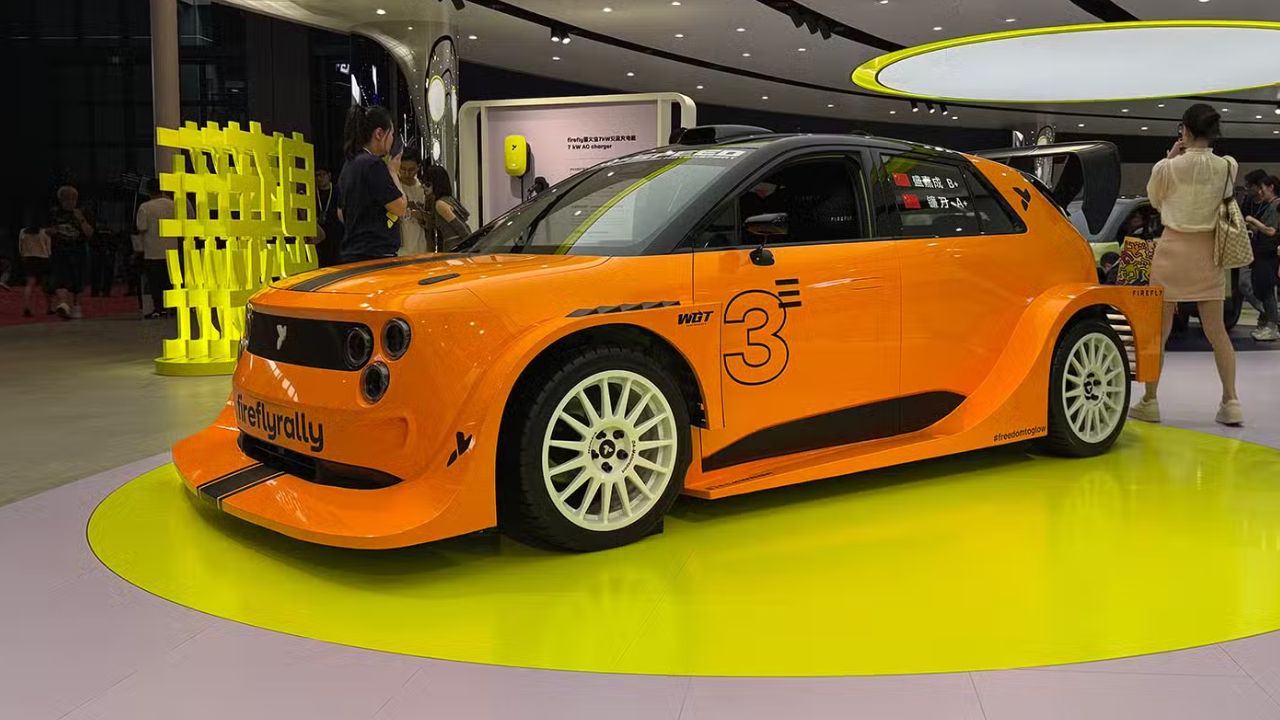
Perhaps the most exciting development in Nio’s export story is its Firefly brand. Firefly represents Nio’s foray into the premium compact EV market, aimed primarily at Europe. The brand’s first and only model so far was launched in China on April 19, 2025, and began deliveries in Europe on August 14, starting with Norway and the Netherlands.
Firefly’s success in Europe has been encouraging. According to the company, it recently shipped a large batch of vehicles to European markets — a move that underscores its growing international ambitions.
While Nio hasn’t disclosed the exact shipment volume, the company confirmed that Firefly’s expansion efforts are now targeting Europe, North America, and Asia, signaling a clear roadmap toward becoming a global EV powerhouse.
Firefly combines European design aesthetics with Nio’s advanced electric powertrain technology, offering a premium yet affordable EV alternative to brands like Volkswagen, Renault, and Tesla in the mid-range segment.
4. Comparing Nio’s Export Strategy to Its Competitors
Nio’s export growth is promising, but the company still trails behind some of its domestic competitors in terms of overseas volume. For instance, Xpeng Motors (NYSE: XPEV) exported 4,999 vehicles in October 2025, according to CnEVPost, marking its second-highest monthly export volume after 5,004 units in September.
Similarly, BYD, China’s largest EV maker, has made aggressive strides in Europe, Southeast Asia, and Latin America, rapidly capturing market share through partnerships and localized manufacturing.
However, Nio’s strategy is different. Instead of pursuing high-volume exports immediately, Nio focuses on brand positioning and premium customer experience, mirroring Tesla’s market-entry approach. The company is known for its Nio Houses — luxurious brand spaces that double as community hubs — and its innovative battery-swapping network, which offers a unique ownership experience compared to rivals.
By prioritizing customer experience and technological differentiation, Nio aims to build brand loyalty in key markets before scaling up export volumes.
5. Nio’s Global Strategy: Europe, North America, and Beyond
Nio has been gradually building its global infrastructure since 2021, with Europe being the first stop. The company began operations in Norway, chosen for its EV-friendly policies and high per-capita EV ownership, before expanding into Germany, Denmark, the Netherlands, and Sweden.
The addition of Firefly shipments to Europe further strengthens this presence, catering to younger and more price-sensitive buyers.
But Nio’s ambitions don’t stop there. For the first time, the company confirmed its plans to enter the North American market, where it aims to compete with legacy automakers like Ford, GM, and Tesla.
While the company hasn’t disclosed a timeline for U.S. market entry, its recent recruitment efforts and trademark filings indicate that Nio is actively preparing for North American operations.
In Asia, Nio has been exploring opportunities in countries like Singapore, Japan, and Malaysia, all of which are seeing rapid growth in EV adoption.
6. Firefly’s Market Appeal and Product Positioning
The Firefly brand’s success lies in its design, affordability, and technology integration. Unlike Nio’s main brand, which focuses on premium SUVs and sedans, Firefly targets the compact EV market, appealing to urban commuters seeking an affordable, high-quality EV.
Key highlights of the Firefly EV include:
- Compact design suitable for European cities.
- High safety standards, aligning with European regulations.
- Intelligent connectivity features powered by Nio’s advanced software ecosystem.
- Battery-swapping compatibility, a major differentiator in convenience and sustainability.
By introducing Firefly in Europe, Nio is testing its multi-brand strategy, similar to how Toyota operates Lexus or Hyundai runs Genesis — a method to capture different market segments while maintaining brand prestige.
7. Technological Innovation: The Foundation of Nio’s Expansion
Nio’s technological edge is a key enabler of its global expansion. The company’s NT 2.0 platform underpins most of its newer models, allowing for scalable production, enhanced safety, and seamless software integration.
Moreover, Nio is one of the few automakers to pioneer battery swapping technology, allowing customers to replace a depleted battery in under five minutes at a Nio Power Swap Station. This eliminates charging time anxiety and extends the lifecycle of battery packs — an appealing feature for fleet operators and high-mileage users.
The company also invests heavily in autonomous driving (AD) and intelligent cockpit systems, powered by its proprietary Aquila super-sensing system and Adam supercomputing platform, based on Nvidia’s Orin chips.
These technologies not only boost performance and safety but also position Nio as a technology-first automaker, appealing to tech-savvy global consumers.
8. Financial and Market Outlook
Nio’s export growth comes at a time when the company is under pressure to improve profitability. Despite its strong sales momentum, the company reported widening net losses in previous quarters due to heavy R&D and infrastructure investments.
However, analysts believe that Nio’s expanding export base, combined with its multi-brand strategy (Nio, Onvo, and Firefly), could help improve economies of scale and reduce per-unit costs.
As exports increase, the company could also benefit from foreign currency gains and premium pricing opportunities in markets like Europe and North America, where EV adoption rates are high and government incentives remain strong.
If Nio can sustain its export growth while maintaining brand consistency and operational efficiency, it stands a good chance of becoming China’s first truly global premium EV brand.
9. Challenges Ahead: Regulations, Competition, and Market Perception
Despite the optimism, Nio faces several hurdles in its export journey:
- Regulatory complexities: Entering the North American market requires compliance with stringent safety, software, and emissions standards.
- Supply chain localization: Establishing production or assembly facilities abroad will be key to avoiding tariffs and ensuring delivery efficiency.
- Brand perception: Competing against established Western automakers demands strong marketing, customer support, and reliability proof.
- Economic uncertainty: Currency fluctuations and trade tensions could impact pricing and profitability.
Nevertheless, Nio’s customer-centric strategy and commitment to innovation give it a competitive advantage that many emerging EV players lack.
10. The Bigger Picture: China’s EV Export Boom
Nio’s growing exports reflect a larger trend — China’s EV export boom. Chinese automakers collectively exported over 1.3 million EVs in 2025, driven by rising global demand for affordable, energy-efficient vehicles.
Brands like BYD, Xpeng, SAIC, and Geely are rapidly expanding into Europe, the Middle East, and Latin America. China’s dominance in battery production and supply chains gives these automakers a cost advantage, allowing them to compete effectively with Western rivals.
Nio’s performance in October exemplifies this shift — Chinese EVs are no longer confined to domestic markets; they are reshaping the global automotive landscape.
Read Also: Federal EV Tax Credits Expire, but Ohio Offers No Relief
11. Expert Opinions and Industry Outlook
Automotive analysts view Nio’s October export surge as a positive sign of scalability and international appeal.
According to industry experts:
- Dr. Li Wei, an EV market researcher in Shanghai, notes, “Nio’s export growth shows that the company’s brand strategy and technology investments are beginning to yield tangible global results.”
- Zhao Jing, a senior analyst at CPCA, adds, “Firefly’s expansion into Europe and North America marks a crucial milestone. Nio is evolving from a high-end domestic EV maker into a globally competitive automaker.”
If current trends continue, Nio could surpass 1,000 monthly exports by early 2026, potentially doubling its overseas delivery base in under a year.
12. Conclusion: Nio’s Global Future Looks Bright
In just a few years, Nio has transformed from a domestic EV startup into an emerging global player. The company’s export figure of 431 vehicles in October 2025, up 143.5% month-on-month, is not just a number — it’s a statement of intent.
With Firefly expanding across Europe and preparing for North America, Nio is laying the foundation for long-term international success.
The company’s commitment to innovation, customer service, and sustainability continues to differentiate it in a crowded EV market.
As global demand for clean mobility surges, Nio’s export growth signals a new chapter — one where Chinese EV manufacturers no longer follow global trends but lead them.
3 thoughts on “Nio Exports 431 Cars in October 2025 — Firefly Expands to Europe & North America”