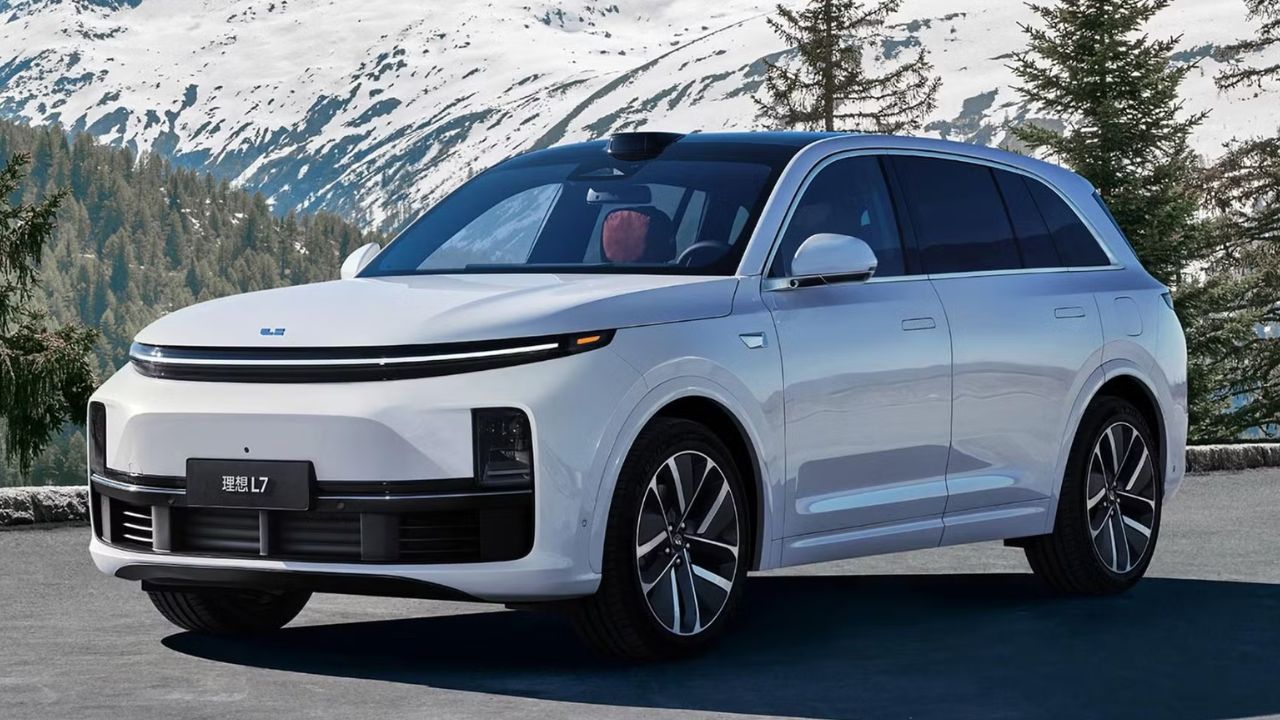
China’s electric vehicle (EV) revolution continues to evolve at a rapid pace, and Li Auto (NASDAQ: LI) remains one of the country’s key players in the extended-range electric vehicle (EREV) segment. Known for blending electric power with fuel-based range extension, Li Auto’s lineup of smart SUVs has been a crucial part of the brand’s identity.
In November 2025, Li Auto announced that its cumulative EREV deliveries had crossed 1.4 million units, a significant milestone showcasing the company’s strong market footprint. However, this achievement arrives amid a noticeable slowdown in its monthly sales — reflecting growing competition and shifting consumer preferences within China’s new energy vehicle (NEV) sector.
This article takes a closer look at Li Auto’s journey, its top-selling models, current market challenges, and what lies ahead for one of China’s most ambitious automakers.
Li Auto: A Pioneer in Extended-Range Electric Vehicles
Founded in 2015 and headquartered in Beijing, Li Auto has established itself as a leader in extended-range EV technology — a category designed to eliminate range anxiety while maintaining eco-friendly performance.
Unlike pure battery electric vehicles (BEVs), EREVs feature both a battery pack and a small internal combustion engine. The engine doesn’t drive the wheels directly but acts as a generator, recharging the battery when it runs low. This hybrid setup allows drivers to enjoy the quiet, efficient operation of an EV without constantly worrying about charging infrastructure.
Li Auto’s vehicles have gained a strong reputation for:
- Long driving ranges (often exceeding 1,000 km combined).
- Premium interior design and technology.
- Family-friendly SUV layouts.
- Competitive pricing within the luxury EV market.
With the cumulative 1.4 million deliveries, Li Auto remains one of China’s top-performing NEV manufacturers, standing alongside BYD, NIO, and XPeng in shaping the future of smart mobility.
Read Also: Nio Delivers Record 10,000+ EVs in One Week as Onvo L90 SUV Surges Toward 30,000 Units Milestone
The Models Behind Li Auto’s 1.4 Million Deliveries
Li Auto’s L-series SUVs have been the driving force behind this milestone. The current lineup includes the Li L6, L7, L8, and L9 — each targeting different consumer segments through variations in size, price, and luxury features.
Li L6: The Affordable Performer
- Launch Date: April 18, 2024
- Starting Price: RMB 249,800 (approx. $35,090)
- Segment: Mid-size family SUV
The Li L6 is Li Auto’s most accessible EREV, designed for middle-income families looking for a premium electric experience without the luxury price tag. Within just five months of launch, the L6 surpassed 100,000 deliveries (by September 2024) — an impressive achievement that showcased strong consumer interest.
By July 2025, total L6 deliveries reached 300,000 units, cementing its place as one of the fastest-selling models in Li Auto’s history.
Li L7: The Family Favourite
- Launch Date: February 8, 2023
- Milestones:
- 100,000 units delivered by November 7, 2023
- 300,000 units by May 10, 2025
- 100,000 units delivered by November 7, 2023
The Li L7 offers a perfect balance between comfort, space, and technology. Its design appeals to families who prioritize both luxury and practicality, featuring advanced driver-assistance systems, ample seating, and Li Auto’s signature EREV drivetrain.
Li L8: The Versatile Mid-Size SUV
- Launch Date: September 30, 2022
- Cumulative Deliveries: Over 250,000 units
The L8 sits between the L7 and L9 in size, offering flexibility and high-end features without reaching the L9’s price range. It’s popular among professionals and families seeking a smart SUV with extended range capabilities.
Li L9: The Flagship SUV
- Launch Date: June 21, 2022
- Starting Price: RMB 409,800
- Cumulative Deliveries: Over 280,000 units
The Li L9 is Li Auto’s luxury flagship — a full-size SUV equipped with cutting-edge technology, premium interiors, and superior range. It competes directly with high-end models from brands like NIO, BYD, and even Tesla’s Model X, offering a compelling alternative with EREV practicality.
Li One: The Legacy Model
- Discontinued Model
- Cumulative Deliveries: Exceeded 200,000 units
The Li One, Li Auto’s first commercial success, played a critical role in establishing the company’s market presence. Though discontinued, its success paved the way for the L-series lineup that followed.
Sales Milestone: 1.4 Million Deliveries and Counting
According to Li Auto’s announcement on Weibo, cumulative deliveries across all models have now surpassed 1.4 million units. The breakdown is as follows:
- Li L6 & L7: Over 330,000 units each
- Li L8: Over 250,000 units
- Li L9: Over 280,000 units
- Li One (discontinued): Over 200,000 units
This collective figure highlights the brand’s continued dominance in the EREV SUV segment — even as competition intensifies.
However, despite the impressive total, Li Auto’s recent monthly sales figures tell a different story.
Sales Decline: A Growing Concern
While cumulative figures reflect years of success, Li Auto’s current sales trend is less encouraging. In October 2025, the company delivered 31,767 vehicles, marking a 38.25% year-on-year decline. This was the fifth consecutive month of significant contraction compared to the same period last year.
Even more striking, year-on-year delivery declines exceeded 50% for all L-series EREVs in September, as reported by CnEVPost.
Several factors contribute to this downward trend:
a) Increased Competition
The Chinese EV market is saturated with new players. Companies like BYD, Geely, XPeng, Zeekr, and even Huawei-backed AITO are introducing advanced hybrid and pure-electric models at competitive prices.
b) Market Shift Toward Pure Electric Vehicles (BEVs)
Consumers are increasingly shifting towards BEVs as charging infrastructure improves and battery technology advances. Li Auto’s EREVs, once a major advantage, are now facing questions about long-term relevance.
c) Production Transition
Li Auto is currently ramping up production for its new pure-electric models (Li i6 and Li i8). This shift has temporarily affected output and delivery efficiency for its EREV models.
d) Recall Setbacks
In a recent setback, Li Auto’s Li Mega MPV — its first pure-electric multi-purpose vehicle — underwent a large-scale recall due to battery fire risks, which may have dented consumer confidence.
New Models: Transitioning Toward Pure Electric Future
Recognizing the market shift, Li Auto is investing heavily in pure-electric vehicles (BEVs). Two major models have already been launched in 2025 — the Li i6 and Li i8 — both positioned as premium electric SUVs aimed at competing directly with Tesla Model Y and BYD Song Plus.
The company’s strategy is clear: to gradually evolve from EREV dominance to full BEV leadership, leveraging its strong brand reputation and intelligent driving systems.
Li Auto’s pure-electric roadmap focuses on:
- Advanced battery management systems.
- 800V high-voltage charging technology.
- Autonomous driving capabilities powered by LiDAR and AI.
- Cloud-connected vehicle software platform.
Pricing and Market Strategy
Li Auto’s pricing structure continues to play a vital role in its competitiveness.
| Model | Starting Price (RMB) | Approx. USD | Segment |
| Li L6 | 249,800 | $35,090 | Mid-size SUV |
| Li L7 | 319,800 | $45,000 | Family SUV |
| Li L8 | 359,800 | $50,000 | Upper Mid-size SUV |
| Li L9 | 409,800 | $57,600 | Full-size SUV |
Despite the slowdown, these vehicles still offer one of the best price-to-feature ratios in the Chinese NEV market.
Li Auto is also exploring export opportunities, eyeing markets in Southeast Asia and Europe, where demand for affordable premium EVs is increasing.
Technology Focus: The Smart Driving Edge
Li Auto’s success has been powered not only by its EREV design but also by its commitment to smart technology integration.
Key Technological Features:
- NOA (Navigate on Autopilot) system with LiDAR support.
- High-definition visual perception modules for autonomous navigation.
- Voice-assistant-powered smart cockpit.
- Over-the-air (OTA) updates for performance and safety enhancements.
- Real-time navigation with AI route optimization.
Li Auto’s SDA (Software-Defined Architecture) allows vehicles to improve continuously through updates, ensuring long-term adaptability.
Challenges Ahead: Sustaining Growth in a Competitive Landscape
Li Auto faces a critical phase as it transitions from EREV leadership to BEV competition. The challenges include:
a) Market Saturation
China’s EV sector is highly crowded, with dozens of brands offering similar specs and pricing.
b) Brand Differentiation
As more automakers introduce advanced hybrid and electric options, Li Auto must clearly define its brand value to stay ahead.
c) Production Scaling
Balancing EREV production while expanding BEV capacity remains a complex operational task.
d) Regulatory and Safety Standards
The recent recall incident highlights the importance of maintaining strict quality and safety standards, especially in high-voltage battery design.
Looking Ahead: Li Auto’s Strategic Outlook
Despite the headwinds, Li Auto’s long-term outlook remains cautiously optimistic. The company plans to:
- Expand its BEV lineup with new models across multiple price ranges.
- Enhance its smart driving algorithms through AI partnerships.
- Strengthen overseas marketing and after-sales networks.
- Improve production efficiency with new factories and automation systems.
Li Auto’s continued investment in R&D and AI-driven driving technology positions it well for the next wave of EV competition — one that prioritizes intelligence, efficiency, and sustainability over raw power.
Read Also: BYD Expands Han Sedan Lineup with New Long-Range EV & Hybrid Models at Lower Prices
Conclusion: A Transitional Moment for Li Auto
Li Auto’s achievement of 1.4 million cumulative EREV deliveries marks a major milestone in China’s EV history. It demonstrates the company’s ability to build consumer trust and deliver reliable vehicles in a rapidly evolving market.
However, the recent sales slowdown signals that the EREV segment may be approaching its maturity phase. As China moves closer to full electrification, Li Auto’s success will depend on how quickly and effectively it can pivot toward pure-electric technologies without losing its loyal EREV customer base.
The journey ahead will test Li Auto’s innovation, adaptability, and strategic vision — but if history is any guide, this pioneering automaker is far from done shaping the future of electric mobility.
FAQs About Li Auto’s EREVs
1. What does EREV mean?
EREV stands for Extended-Range Electric Vehicle, combining a battery-powered electric drivetrain with a small petrol generator that recharges the battery when needed.
2. How many EREVs has Li Auto delivered so far?
As of late 2025, Li Auto has delivered over 1.4 million EREVs cumulatively across all models.
3. Which Li Auto model is the most popular?
The Li L6 and Li L7 are currently the most popular, each surpassing 330,000 cumulative deliveries.
4. Why are Li Auto’s sales declining recently?
The decline is due to intense market competition, a shift toward BEVs, and production transitions for new electric models.
5. What’s next for Li Auto?
The company is focusing on expanding its pure-electric lineup, including new models like the Li i6, Li i8, and the upcoming Li Mega BEV.
6 thoughts on “Li Auto’s EREVs Reach 1.4 Million Cumulative Deliveries Despite Sales Slump”