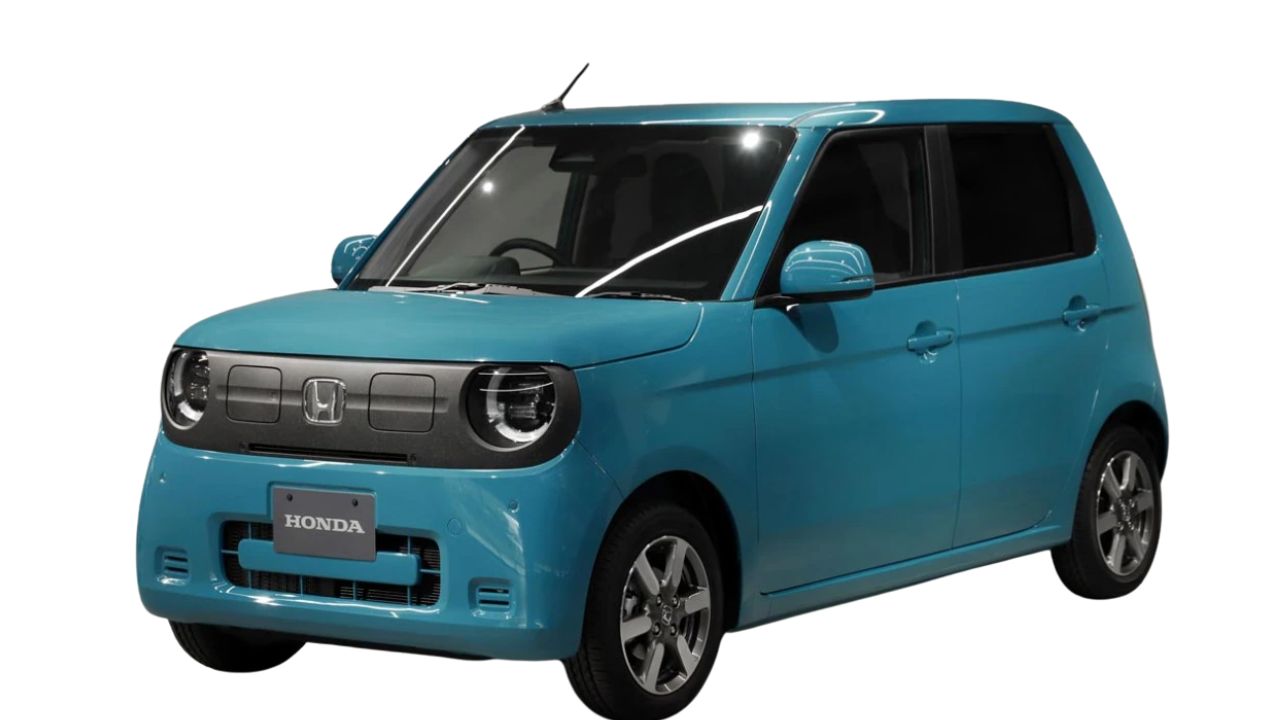
The global electric vehicle (EV) market is witnessing rapid evolution, and Japanese automaker Honda is stepping into the spotlight with its latest release — the Honda N-ONE e, an electric version of the popular N-ONE kei car. Compact, stylish, and designed for affordability, the N-ONE e brings an attractive balance of impressive driving range, cutting-edge technology, and a budget-friendly price tag. This new model symbolises Honda’s ambition to make electric mobility more accessible while staying true to the Japanese culture of building highly functional, small cars tailored for urban environments.
While large SUVs and luxury EVs dominate headlines, Honda is betting on something quite different. The N-ONE e is proof that the future of EVs doesn’t have to be massive — it can be small, practical, and sincerely useful for everyday city life. In this article, we cover everything you need to know about Honda’s new compact electric car: its design, range, features, pricing strategy, and the role it could play in democratising electric mobility.
The Rise of Kei Cars Meets Electric Power
In Japan, kei cars — tiny vehicles adhering to strict regulatory size and engine limits — have been popular for decades. They are cheap to own, easy to maneuver, and well-suited for narrow Japanese streets. With electrification, kei cars are finding new relevance, as their compact size allows automakers to build lighter vehicles with smaller but efficient batteries — ultimately reducing costs while still providing adequate driving range.
The Honda N-ONE, a retro-inspired hatchback resembling Honda’s classic N360 from the 1960s, has won hearts as a petrol-powered kei car since its introduction. The shift to an electric version was only a matter of time, as stricter emissions rules and growing customer demand push automakers toward sustainable alternatives.
The introduction of the Honda N-ONE e is an important step for Honda, as it showcases the brand’s commitment to EV innovation across all market segments — not just premium or mainstream models, but even compact urban runabouts.
Read Also: Tata Sumo 2025 Launched in India – Mileage, Price, Features
Design and Exterior Styling
The N-ONE e strikes a perfect blend of retro charm and modern electric styling. Based on the same design philosophy as its petrol counterpart, it retains the timeless round headlights, compact profile, and tall-boy hatchback silhouette. Honda has added EV-specific styling cues, such as:
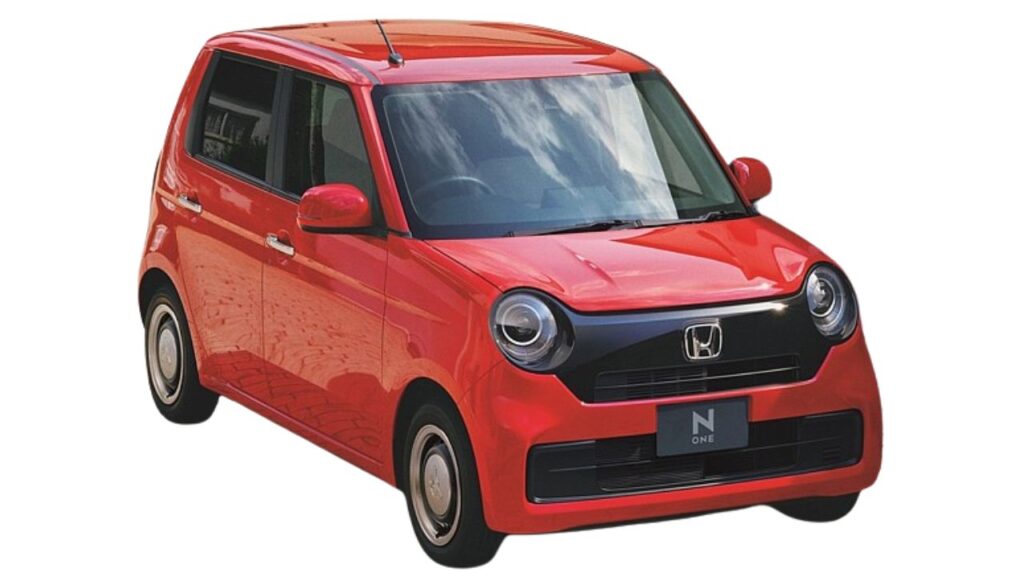
- A closed-off front grille for better aerodynamics.
- Blue-accented Honda logo signalling its EV identity.
- Subtle tweaks to improve airflow and efficiency.
- Updated alloy wheel designs optimised for reducing drag.
At under 3.5 meters long, the N-ONE e remains micro-sized by global standards. Yet, its boxy proportions ensure ample headroom and practical space for both passengers and cargo. This makes it not just a city commuter, but also a versatile small family car in Japan and potentially export markets where smaller EVs are gaining interest.
Interior and Technology
While the N-ONE e may be compact on the outside, its interior feels surprisingly roomy and modern. Honda has maximised space efficiency, a hallmark of kei cars, by pushing the wheels to the corners and lowering the battery pack under the floor. The result is an uncluttered, ergonomic cabin with clever storage solutions.
Key interior highlights include:
- A digital instrument cluster with EV-specific data like range, charge percentage, and energy flow.
- Honda’s infotainment touchscreen with smartphone connectivity, navigation, and integrated EV services (like nearby charging station search).
- Minimalist dashboard with physical buttons for essential functions, maintaining ease of use.
- Quality materials that feel premium for its segment, including eco-friendly trim options.
- Flexible seating, with rear seats that fold flat to provide significant cargo space for a compact EV.
For its size and class, the N-ONE e feels far from basic. It is well-equipped, offering modern features that customers expect without pushing the price too high.
Battery, Range, and Performance
Perhaps the most exciting aspect of the Honda N-ONE e is its driving range. Despite being a tiny car, Honda has engineered it with a battery pack that allows for up to 300 kilometers per charge (under Japan’s WLTC cycle). This figure is notable because many compact EVs often compromise on range due to cost or space, but Honda has prioritised efficiency and lightweight design to maximise distance.
Other performance highlights include:
- Battery Pack: Around 30–35 kWh capacity (estimated for balance of size and range).
- Range: Up to 300 km, which is sufficient for most daily commuting and urban driving.
- Charging: Support for both AC charging and DC fast-charging, enabling an 80% charge in under 40 minutes on compatible chargers.
- Motor: A single electric motor delivering around 70–90 horsepower, making it peppy for city driving.
- Top Speed: Approximately 120–130 km/h, adequate for highway use though not intended for high-speed touring.
This balance makes the N-ONE e a perfect city commuter with enough flexibility for weekend getaways or suburban driving.
Safety and Driver Assistance
Honda continues its tradition of prioritising safety, even in its smallest models. The N-ONE e integrates the Honda Sensing suite, ensuring drivers remain protected and confident on the road. Safety features include:
- Adaptive Cruise Control
- Lane-Keeping Assist
- Collision Mitigation Braking System
- Automatic Emergency Braking
- Road Departure Mitigation
- Parking Sensors and Rear-View Camera
By including these technologies, Honda ensures that the N-ONE e is not just affordable, but also reliable and safe for both new and experienced EV users.
Pricing Strategy
One of the biggest selling points of the Honda N-ONE e is its affordable price. While many EVs still hover in the premium or mid-tier price range globally, Honda is aiming to make the N-ONE e an entry-level EV accessible to a wider range of consumers.
Industry insiders suggest the N-ONE e will start pricing at just under ¥2 million (around $13,500–$14,000 in global markets). This positions it as one of the most affordable long-range EVs on the market, even competing with budget Chinese EVs that are rapidly gaining traction in Asia.
By combining low price, respectable range, and everyday usability, Honda hopes to attract younger buyers, urban commuters, and eco-conscious drivers who previously hesitated due to high EV costs.
Market Potential and Global Role
The N-ONE e is primarily designed for Japan, where kei cars dominate the automotive landscape. However, industry watchers note its strong potential in:
- European cities — where compact EVs with affordable pricing are in high demand.
- Southeast Asia — where two-wheelers dominate, but small EVs are emerging as alternatives.
- Urban markets worldwide — where congestion, parking space scarcity, and emissions rules are shaping new buyer preferences.
With growing global interest in sustainable mobility, the N-ONE e could become an export success story for Honda, especially given its balance of affordability, range, and practicality.
Honda’s EV Roadmap and Competitiveness
The launch of the N-ONE e fits into Honda’s larger EV roadmap. The company has pledged ambitious plans to electrify most of its lineup by 2040, including the introduction of several mainstream EVs. By starting with a compact, affordable city car, Honda is addressing immediate consumer needs while building brand trust in EV technology.
In comparison to rivals, the N-ONE e positions itself uniquely:
- Against Nissan Sakura and Mitsubishi eK X EV, it offers a competitive range and similar affordability.
- Against Chinese micro EVs like the Wuling Hongguang Mini EV, it delivers higher safety standards and advanced features.
- Against European city EVs like the Fiat 500e, it undercuts significantly on price while offering comparable daily usability.
This balance could prove to be Honda’s winning formula as more consumers demand practical solutions rather than luxury EVs.
Read Also: Renault Kiger 2025: Launch, Updates, and Complete Specifications
FAQs About the Honda N-ONE e
Q1: What is the range of the Honda N-ONE e?
The N-ONE e offers up to 300 km of range on Japan’s WLTC cycle, making it one of the longest-range kei EVs.
Q2: How long does it take to charge?
With DC fast charging, the battery can reach 80% in about 40 minutes. On a regular AC home charger, it takes around 6–8 hours for a full charge.
Q3: Is the Honda N-ONE e available outside Japan?
Initially, it will debut in Japan, but Honda may expand to select global markets where small EVs are in demand.
Q4: How much will it cost?
Pricing is projected to start under ¥2 million ($13,500–$14,000), making it one of the most affordable EVs available with serious range capability.
Q5: Who should buy the N-ONE e?
It is ideal for urban commuters, small families, young drivers, or anyone wanting an affordable entry-point into EV ownership.
Conclusion
The Honda N-ONE e represents what the EV market desperately needs right now — a car that combines small size, big efficiency, long range, and low price. While most automakers are competing to build larger, more luxurious electric SUVs, Honda has chosen to prioritize practical, affordable, and eco-friendly mobility.
If priced and marketed aggressively, the N-ONE e could become a game-changer in the small EV space, not just in Japan but globally. In a world where consumers often feel priced out of the EV transition, Honda’s tiny but mighty N-ONE e is a reminder that electric mobility should be accessible for everyone, not just a luxury for the few.
1 thought on “Honda N-ONE e: The Tiny Electric Car With Big Range at a Small Price”