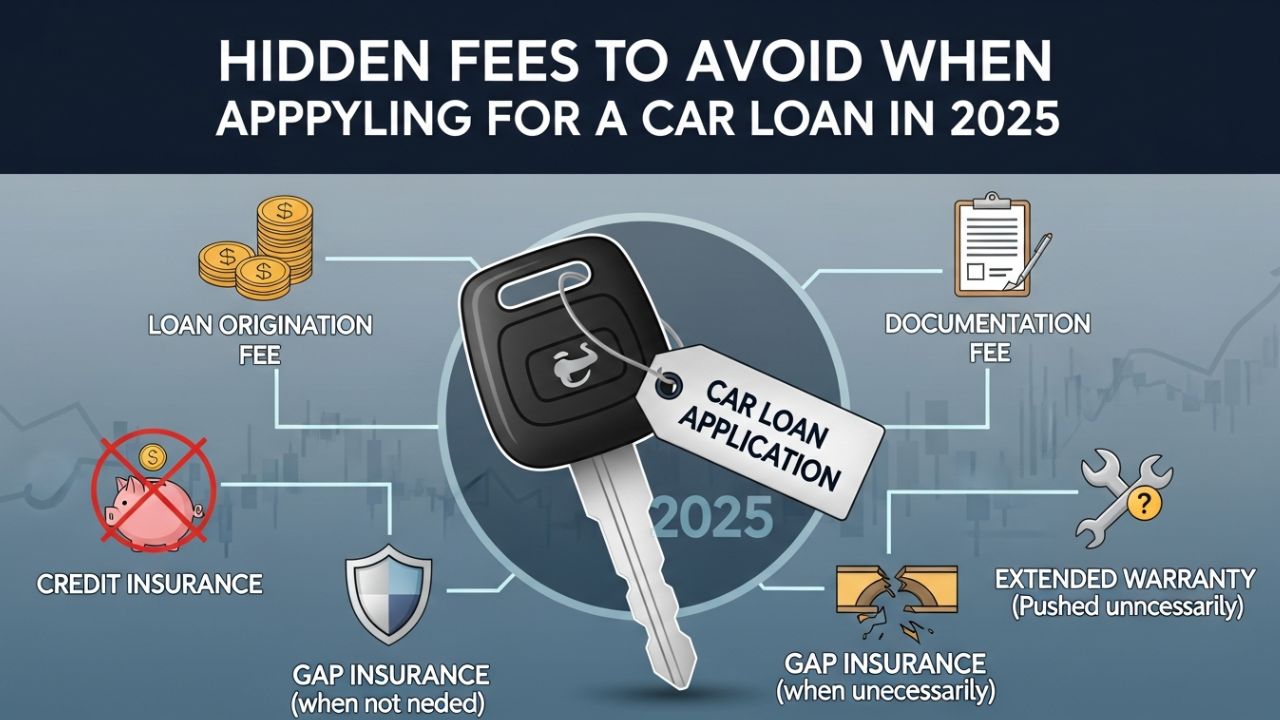
Securing a car loan in 2025 requires vigilance against hidden fees that can inflate borrowing costs by 10-20% beyond advertised rates. These often-overlooked charges, like processing fees and prepayment penalties, add up quickly, but awareness and negotiation can help buyers minimize or eliminate them.
Understanding Car Loans in 2025
Car loans remain a popular financing option amid rising vehicle prices, with average new car costs hitting ₹15-20 lakhs in India. Lenders offer terms from 12-84 months at interest rates of 8-15%, but hidden fees frequently undermine these deals. In 2025, digital applications have streamlined processes, yet transparency lags in some non-banking financial companies (NBFCs).

Economic factors like RBI’s repo rate adjustments influence base rates, but add-ons vary by lender. Public sector banks like SBI cap processing fees at ₹750-₹1,250 plus GST for loans up to ₹10 lakhs, while private players like HDFC may charge up to 2%. Borrowers must scrutinize loan agreements to avoid surprises during repayment.
The shift toward electric vehicles (EVs) introduces specialized loans with subsidies, but hidden charges persist, such as valuation fees for used EVs. Overall, informed applicants save thousands by comparing offers from multiple sources.
Common Hidden Fees in Car Loans
Hidden fees in car loans encompass various administrative and penalty charges not immediately obvious during initial quotes. These can range from 1-5% of the loan amount, significantly raising the effective annual percentage rate (APR). In India, GST applies to most, adding another layer of cost.
Processing fees top the list, often 0.5-2% of the principal, non-refundable even if the loan falls through. Documentation charges, around ₹500-₹1,000, cover paperwork but exclude stamp duty, which varies by state—up to ₹8,800 in Karnataka for a ₹16.5 lakh loan. Late payment penalties, at 2-5% per month on overdue EMIs, compound quickly for forgetful borrowers.
Prepayment or foreclosure fees hit 2-6% if closing early within 12-24 months, offsetting interest savings. Other sneaky ones include CERSAI registration (₹100-₹500) for asset hypothecation and bounce charges (₹300-₹600) for failed EMIs. In 2025, with digital lending rising, app-based verification fees are emerging, sometimes ₹200-₹500 per check.
Read Also: How to Pay Off Your Car Loan Early – Save Interest & Boost Credit
Processing and Application Fees
Processing fees are among the most unavoidable yet negotiable hidden costs when applying for a car loan. Banks like ICICI charge up to 2% plus GST for new cars, translating to ₹10,000-₹20,000 on a ₹10 lakh loan, deducted upfront from the disbursal amount. This reduces the actual funds received, effectively increasing the cost.
Application fees, though rare in major banks, appear in some NBFCs as ₹500-₹2,000 for credit checks. In 2025, with CIBIL scores integral, lenders may request reports (₹50 each) or impose valuation charges for used cars—₹800 at ICICI. Stamp duty, a government-mandated fee based on loan value and state laws, isn’t truly “hidden” but often surprises applicants, reaching 0.5% or more.
To avoid escalation, apply through platforms like BankBazaar that compare fee structures. Waivers are possible for high-credit-score applicants (above 750), as seen with SBI’s minimal ₹750 flat fee for small loans. Always demand a fee breakdown before signing.
Documentation and Administrative Charges
Documentation charges cover legal paperwork, typically ₹500-₹650 per case, but balloon with add-ons like RC collection fees (₹600 at HDFC) or information utility charges (₹300 for corporates). These are mandatory for hypothecation, registering the lender’s lien on the vehicle.
Administrative fees include SOA (statement of account) requests at ₹250 from Mahindra Finance or mode change charges (₹500) for switching repayment methods. In used car loans, inspection or valuation fees—₹800-₹1,500—assess the vehicle’s condition, often non-negotiable. RTO transfer charges for ownership shifts add “at actuals,” potentially ₹2,000-₹5,000 in metro cities.
2025 trends show digital KYC reducing some docs fees, but paper-based states like Tamil Nadu still levy extras. Borrowers can save by preparing documents in advance—ID proofs, income statements—to skip expedited handling fees. Lenders like Bajaj Finserv bundle these into processing, but transparency varies.
Prepayment and Foreclosure Penalties
Prepayment penalties discourage early repayment, charging 2-3% on the outstanding amount if done within 12-24 months. ICICI waives them after 24 months but levies 3% plus GST earlier, eroding savings from lump-sum payments. Foreclosure, or full early closure, can cost up to 6% at some NBFCs, making long tenures costlier overall.
In India, RBI guidelines cap these at 2-4% for floating-rate loans, but fixed-rate ones from private lenders often exceed this. For a ₹10 lakh loan prepaid after a year, a 3% fee equals ₹30,000—more than a month’s EMI. 2025 updates emphasize nil charges for small borrowers, but corporates face higher hurdles.
Opt for lenders like SBI, which eliminated prepay fees for most retail loans post-2020. Negotiate clauses allowing penalty-free partial prepayments from day one, as in some Shriram Finance deals. This flexibility aids if windfalls like bonuses arise.
Late Payment and Penalty Fees
Late payment fees accrue on overdue EMIs, often 2-5% monthly plus GST, calculated on the principal. A single missed ₹30,000 EMI at 5% adds ₹1,500 immediately, snowballing with compounding. Bounce charges for insufficient funds—₹300-₹600 per instance—pile on if auto-debits fail.
Penal interest, at 4-6% above the base rate, applies until clearance, turning a one-week delay into hundreds in extras. In 2025, with UPI integrations, some banks like HDFC automate reminders, but penalties remain standard. For secured loans like car financing, persistent defaults trigger repossession charges “at actuals,” covering legal and recovery costs up to ₹25,000.
Security guard or paper advertisement fees during recovery add ₹5,000-₹10,000. To sidestep these, set up ECS mandates and maintain a buffer in linked accounts. Grace periods of 3-5 days exist at progressive lenders like Aditya Birla, reducing inadvertent hits.
Insurance and Gap Coverage Fees
Car loans often mandate comprehensive insurance, but hidden fees lurk in bundled policies. Lenders add single-premium insurance to the loan, inflating principal by 5-10%—e.g., ₹50,000 policy on a ₹10 lakh loan. Gap insurance, covering loan-vehicle value shortfalls in totals, costs ₹5,000-₹15,000 annually but is upsold aggressively.
Credit life insurance, protecting against borrower death, seems beneficial but charges 0.5-1% of the loan yearly, often non-optional. In 2025, with EV mandates, battery protection add-ons emerge as ₹2,000-₹5,000 fees. Foreign transaction fees aren’t direct but apply if financing imported cars via credit.
Shop standalone policies via aggregators like PolicyBazaar for 20-30% savings over lender-tied ones. Decline unnecessary gap coverage if you have savings; RBI allows opting out for pure loans. Verify inclusions to avoid premium allocation surprises during claims.
Dealer and Third-Party Add-Ons
Dealers pad loans with third-party fees like destination (₹10,000-₹20,000 for shipping) or VIN etching (₹1,000-₹2,000 for anti-theft). Fabric/paint protection, rustproofing, or advertising fees—₹500-₹5,000 each—sound optional but get financed into the loan, raising interest burden.
In India, hypothecation stamps or agent commissions add ₹1,000-₹3,000, sometimes passed to buyers. 2025’s connected car trend introduces software activation fees (₹2,000-₹5,000) bundled in financing. Reddit users report Kia dealers quoting ₹8,800 stamp duty plus ₹1,770 processing, totaling over ₹10,000 upfront.
Insist on itemized bills and refuse non-essentials—many protections are dealer markups on basic services. Buy from authorized dealers with transparent financing; cross-check with bank statements post-dispersal. Platforms like Park+ highlight these in reviews.
Tax and Registration-Related Hidden Costs
Taxes and registration fees, while legal, hide variability by state and vehicle type. GST on processing (18%) adds ₹1,800 to a ₹10,000 fee, and road tax (4-15% of ex-showroom price) isn’t loaned but impacts budgeting. For used cars, transfer duties (₹2,000-₹10,000) plus hypothecation removal (₹1,500) surprise buyers.
In 2025, EV loans face green cess exemptions, but battery registration fees (₹500-₹1,000) apply in some states. CERSAI charges for central registry (₹100-₹500) ensure no duplicate liens but get overlooked. Annual property tax on financed vehicles, around ₹1,000-₹5,000, starts post-registration.
Pre-calculate via state RTO portals; some lenders like Piramal include estimates in quotes. Opt for loans covering only principal to avoid tax financing at interest. This keeps total ownership costs under control.
Strategies to Avoid or Minimize Hidden Fees
To dodge hidden fees, start with a strong credit score (750+) for waivers—SBI offers lower processing for high CIBIL. Compare at least three lenders via BankBazaar or Paisabazaar, focusing on all-in APR including fees. Negotiate everything: processing down 20-50%, nil prepay for floating rates.
Read the fine print—demand Most Important Terms and Conditions (MITC) upfront. Increase down payment to 20-30% reducing loan size and thus fees. Choose longer tenures for lower EMIs but watch total interest; partial prepays without penalties help balance.
Use digital banks like Acko or Jupiter for fee-free apps in 2025. Avoid dealer financing; get pre-approvals from banks first. Track disbursal statements for unauthorized add-ons and dispute via RBI’s Sachet portal if needed. Building an emergency fund prevents late fees.
Opt for transparent NBFCs like Kogta, promising no hiddens for used cars. Annual reviews of loan statements catch creeping charges. Ultimately, education empowers—join forums like CarsIndia on Reddit for real-user insights.
Case Studies and Real-World Examples
In a 2025 Bangalore case, a buyer financing a ₹16.5 lakh Kia faced ₹1,770 processing plus ₹8,800 stamp duty—10% extra upfront. Switching to Indian Bank dropped rates to 8.65% with lower fees, saving ₹15,000 overall. Another HDFC borrower paid ₹20,000 processing on ₹9 lakhs, later regretting non-negotiation.
An EV loan via Bajaj for a Tata Nexon added ₹10,000 gap insurance without consent, inflating EMI by ₹500 monthly. The buyer canceled, opting for standalone cover and saving ₹8,000 yearly. In Mumbai, a used car loan from Shriram incurred 3% foreclosure after 18 months, costing ₹15,000 on a ₹5 lakh balance—avoided by choosing nil-penalty options.
These examples underscore due diligence: one Delhi applicant saved ₹12,000 by comparing ICICI (2% fees) vs. SBI (0.75%), highlighting public banks’ edge for salaried folks. Lessons include verifying state duties and declining upsells.
Read Also: AI in Car Loan Approval – How Fintech Is Changing Auto Financing
Regulatory Protections and 2025 Updates
RBI’s 2025 guidelines mandate fee disclosures in loan offers, capping prepay at 2% for individuals and requiring APR calculations. The Digital Personal Data Protection Act curbs unauthorized add-ons by enhancing consent rules. Insolvency and Bankruptcy Code protections shield against aggressive recovery fees.
State variations persist—Karnataka’s high stamp duty contrasts Tamil Nadu’s streamlined RTO. Consumer forums like those under the Consumer Protection Act allow disputes for hidden charges, with successes in fee refunds. 2025’s fintech boom promises transparent apps, but verify IRDAI for insurance bundles.
Borrowers can leverage the Banking Ombudsman for complaints, resolving 70% of fee disputes in under 30 days. Stay updated via RBI alerts; push for explainable AI in credit assessments to avoid biased fee impositions.
Conclusion
Navigating hidden fees in 2025 car loans demands proactive research and negotiation to secure fair terms. By prioritizing transparent lenders and understanding all charges, buyers can drive away with savings intact and peace of mind. This approach not only cuts costs but fosters smarter financial habits for long-term vehicle ownership.