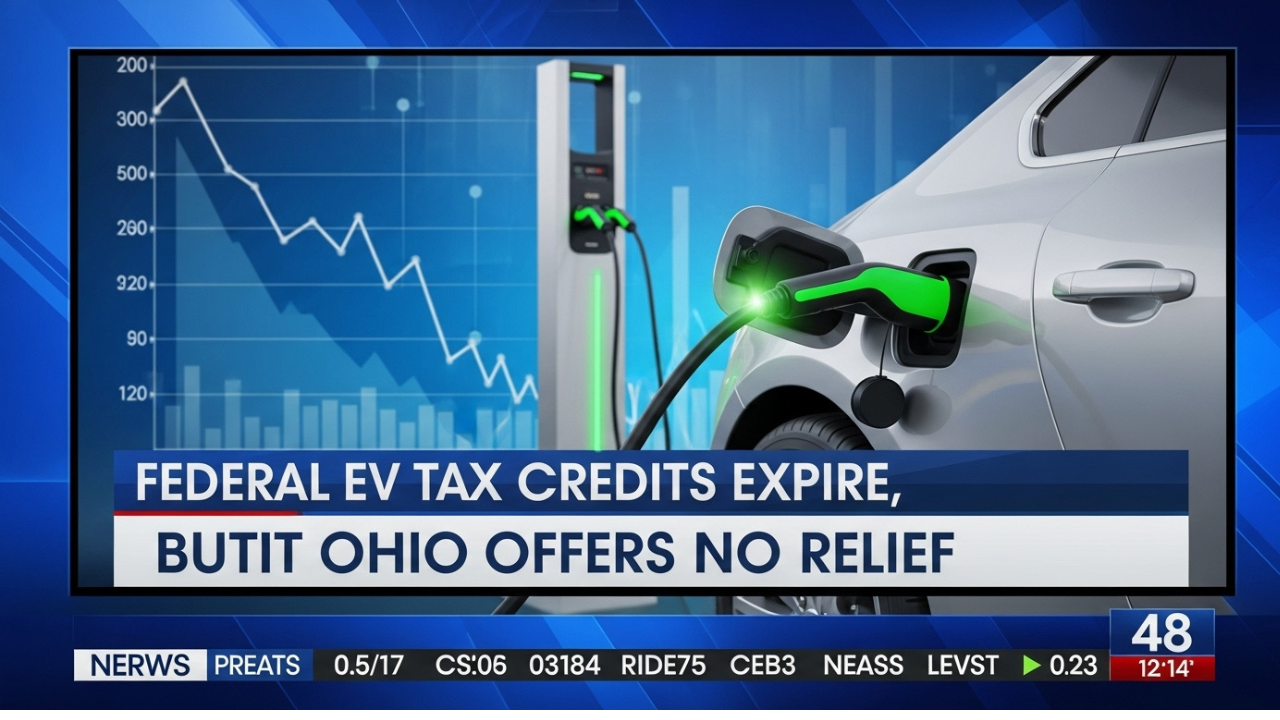
The electric vehicle (EV) revolution in the United States has been powered not only by innovation but also by incentives. Federal and state tax credits have helped millions of Americans afford the switch from gas-powered cars to cleaner, electric alternatives. However, as of September 30, 2025, the federal EV tax credit program has officially expired—leaving many potential buyers facing higher costs at a time when affordability is already a major concern.
For residents of Ohio, the situation is even tougher. While some states have stepped in to provide local rebates or tax incentives to fill the gap, Ohio has not introduced any new financial relief for EV buyers. Instead, the state continues to impose additional registration fees on electric and hybrid vehicles, further discouraging adoption.
This article explores how the end of federal tax credits—and the lack of state-level support in Ohio—could reshape the EV market, slow adoption, and challenge the nation’s clean-energy goals.
The End of the Federal EV Tax Credit
How the Federal Tax Credit Worked
The federal EV tax credit was introduced under the Energy Improvement and Extension Act of 2008 and later expanded under the Inflation Reduction Act (IRA) of 2022. It provided up to $7,500 in tax savings for qualifying new electric vehicle purchases, depending on factors like battery size, assembly location, and manufacturer sales caps.
This credit played a major role in making EVs more accessible. For example:
- A buyer of a $45,000 EV could reduce their effective cost to around $37,500.
- It helped bridge the price gap between EVs and comparable gasoline cars.
- It incentivized automakers to increase EV production capacity in the U.S.
Why It Ended
The expiration was largely due to legislative gridlock and budget negotiations in Congress. Lawmakers failed to extend the credit before the deadline, despite strong lobbying from automakers and clean energy advocates.
While there were proposals to restructure the credit—to target domestic manufacturing or middle-income buyers—they stalled amid debates over spending priorities and trade concerns with China.
As a result, EV buyers purchasing new vehicles after September 30, 2025, are no longer eligible for the federal tax benefit.
The Fallout: What Happens Without the Federal Credit
The end of federal incentives immediately raises the cost of new EV ownership. Analysts estimate that removing the $7,500 credit could reduce EV affordability by 15%–20% for the average buyer.
For automakers, the policy shift creates both short-term sales uncertainty and long-term planning challenges. Companies that ramped up production expecting continued government support must now rely on market forces alone.
Impact on Consumers
- Higher Upfront Costs – EVs already tend to have higher sticker prices than gasoline vehicles due to battery costs. Without tax relief, this price difference becomes more pronounced.
- Financing Becomes Harder – With car loan interest rates near 8%, the absence of tax credits removes a key offset that helped lower monthly payments.
- Used EV Prices May Rise – As new EV demand cools, used models could hold or increase in value due to reduced new supply.
- Delayed Purchases – Many consumers may postpone their EV purchase decisions, waiting for potential new incentives or price drops.
Impact on Automakers
Manufacturers like Tesla, GM, and Ford had leveraged the credit as part of their sales strategies. The expiration may:
- Slow sales momentum, especially for entry-level EVs.
- Reduce demand for domestically produced models designed to meet IRA requirements.
- Push automakers to offer private incentives or discounts to stay competitive.
Companies heavily invested in electrification, such as General Motors and Hyundai, have already expressed concern that the sudden policy change undermines long-term consumer confidence.
Ohio’s EV Landscape: A Growing Market Without Support
Ohio’s Role in the EV Transition
Ohio has positioned itself as a key manufacturing hub for the EV industry. Major automakers like Honda, LG Energy Solution, and Ford have invested billions in EV and battery plants across the state.
However, when it comes to consumer incentives, Ohio lags behind other states. Unlike California, Colorado, or New York—each offering thousands of dollars in rebates or credits for EV purchases—Ohio provides no direct financial assistance to EV buyers.
Instead: Additional Fees
Rather than offering relief, Ohio imposes annual registration surcharges on electric and hybrid vehicles:
- $200 fee for fully electric vehicles
- $100 fee for hybrid vehicles
These fees were introduced to offset lost fuel tax revenue, but critics argue they effectively penalize environmentally conscious drivers.
For an average Ohio family, these extra costs—combined with higher upfront vehicle prices—make EV ownership financially challenging.
Comparing Ohio to Other States
Here’s how Ohio stacks up against other major EV-adopting states:
| State | EV Purchase Incentive | Additional Fees | Average EV Market Share (2025) |
| California | Up to $7,500 rebate + HOV access | $100 annual fee | 23% of new car sales |
| New York | Up to $2,000 rebate | $75 fee | 11% of new car sales |
| Colorado | Up to $5,000 state tax credit | $50 fee | 13% of new car sales |
| Texas | Up to $2,500 rebate | $200 fee | 9% of new car sales |
| Ohio | No rebate | $100–$200 annual fee | 4% of new car sales |
The data shows that Ohio’s approach is more punitive than supportive. Without direct incentives, EV adoption in the state has lagged well behind the national average.
Why Ohio’s Stance Matters
Ohio is not just any state—it’s a bellwether for middle America. With its mix of urban centers, suburban commuters, and rural communities, it mirrors much of the nation’s demographic and economic diversity.
If EV adoption slows in Ohio, it could signal a broader stall in America’s transition to clean mobility. Experts warn that policies like Ohio’s could discourage mainstream consumers who are already skeptical about EV range, charging infrastructure, and affordability.
A Missed Opportunity for Leadership
Ohio’s robust auto manufacturing history, skilled workforce, and emerging battery investments position it perfectly to lead the EV era. But without consumer-level incentives, the state risks falling behind in actual adoption—even as it helps build the vehicles of the future.
The Broader Economic Impact
On EV Sales Nationwide
Analysts predict that the expiration of the federal EV credit could slow U.S. EV sales growth by as much as 15% in 2026. While luxury EVs may weather the impact, budget-conscious buyers are likely to retreat from the market.
On Job Creation
Ohio’s EV supply chain employs thousands of workers. A slowdown in demand could eventually ripple back through these industries, reducing production rates and threatening planned factory expansions.
On Environmental Goals
The Biden administration has set ambitious targets: 50% of all new car sales to be electric by 2030. Without financial incentives, achieving that milestone becomes significantly harder, especially in non-coastal states.
Public Reaction: Frustration and Uncertainty
Many Ohio residents who were planning to purchase an EV this year have expressed disappointment at the lack of support. Online forums and local dealerships report increasing customer hesitation.
One Columbus resident summed it up:
“I was ready to go electric, but losing the federal credit changed everything. I can’t justify paying $45,000 for a compact SUV when I can get a gas one for $30,000.”
Dealers are also concerned. Without tax credits, salespeople face an uphill battle convincing customers that EVs make financial sense—especially when the upfront costs are thousands higher than traditional cars.
Automaker Response: Incentives and Adjustments
Some automakers are trying to soften the blow by introducing their own financing deals and rebates:
- Tesla has reduced prices on several models to remain competitive after the credit loss.
- Ford is offering low-interest financing for the Mustang Mach-E and F-150 Lightning.
- Hyundai and Kia are exploring dealership-level discounts and loyalty bonuses.
However, these private incentives are limited and vary by region. They can’t fully replace the consistency and scale of a nationwide tax credit.
Experts Weigh In
Energy Analysts
Energy economists note that removing incentives during a period of economic strain could backfire. With interest rates high and savings low, they argue that government support is essential to maintaining momentum in the clean energy transition.
Environmental Advocates
Environmental groups in Ohio have criticized the state’s lack of response. They argue that the registration fees are counterproductive, penalizing drivers who reduce emissions and save on fuel consumption.
“We should be rewarding people for driving cleaner vehicles, not charging them extra,” said an advocate from the Ohio Environmental Council.
Economists
Some economists warn that policy inconsistency is creating market confusion. Businesses and consumers alike are hesitant to invest when incentives can vanish overnight.
The Path Forward: What Can Be Done?
1. State-Level Incentives
Ohio could follow the example of states like Colorado or New Jersey by introducing a state tax credit or rebate for EV buyers. Even a modest $1,000–$2,000 credit could make a big difference for middle-income households.
2. Utility Company Rebates
Electric utilities can also play a role by offering charging station rebates or off-peak rate discounts to encourage EV adoption. Some Ohio utilities have pilot programs, but statewide expansion could have a greater impact.
3. Federal Reintroduction
There is growing pressure on Congress to reinstate or redesign the federal credit—possibly targeting American-made vehicles or lower-income buyers. If passed, it could reignite consumer interest nationwide.
4. Public Education
Consumer awareness remains key. Many drivers still believe EVs are unaffordable or impractical. State agencies and automakers can partner to highlight real-world cost savings from fuel and maintenance reductions.
Consumer Tips: Navigating the New Landscape
If you’re considering an EV purchase in Ohio—or anywhere else—here’s how to make the most of your investment:
- Shop Manufacturer Deals – Look for automaker rebates, special financing, or loyalty programs.
- Compare Total Cost of Ownership – Even without tax credits, EVs save money over time on fuel and maintenance.
- Check Local Utility Incentives – Some power companies offer rebates for home charger installation or discounted electricity rates for nighttime charging.
- Consider Certified Used EVs – These often qualify for better financing and may include remaining battery warranties.
- Plan for Charging – Assess your local charging network and home setup before purchasing.
Conclusion
The expiration of the federal EV tax credit marks a turning point for America’s electric vehicle market. Without it, affordability challenges are rising—especially in states like Ohio, where no new incentives exist to soften the blow.
While automakers and consumers alike continue to believe in the future of electrification, policy support remains crucial to maintain momentum. If Ohio and other states fail to act, they risk slowing the nation’s progress toward cleaner transportation and a sustainable economy.
In short, the road to an all-electric future just got steeper—and without local support, Ohio drivers may find themselves left behind in the race toward zero emissions.
4 thoughts on “Federal EV Tax Credits Expire, but Ohio Offers No Relief”