Introduction
In an effort to strengthen its position in the increasingly competitive Chinese electric vehicle (EV) market, BYD has expanded its popular Han sedan lineup with new long-range variants for both the hybrid Han DM-i and the all-electric Han EV. The move comes as the automaker seeks to reignite sales momentum after a challenging year marked by slowing demand and heightened competition from domestic and international rivals.
The newly launched models not only deliver greater driving ranges but also come at reduced effective prices, thanks to BYD’s generous limited-time offers and trade-in subsidies. This strategy highlights the brand’s adaptability in responding to market trends while continuing to position itself as a leader in China’s high-end EV segment.
This detailed article explores the new variants, pricing updates, features, and the strategic reasons behind BYD’s decision to refresh the Han lineup. It also analyses how this move could impact BYD’s market performance in the months ahead.
Overview of the BYD Han Sedan Series
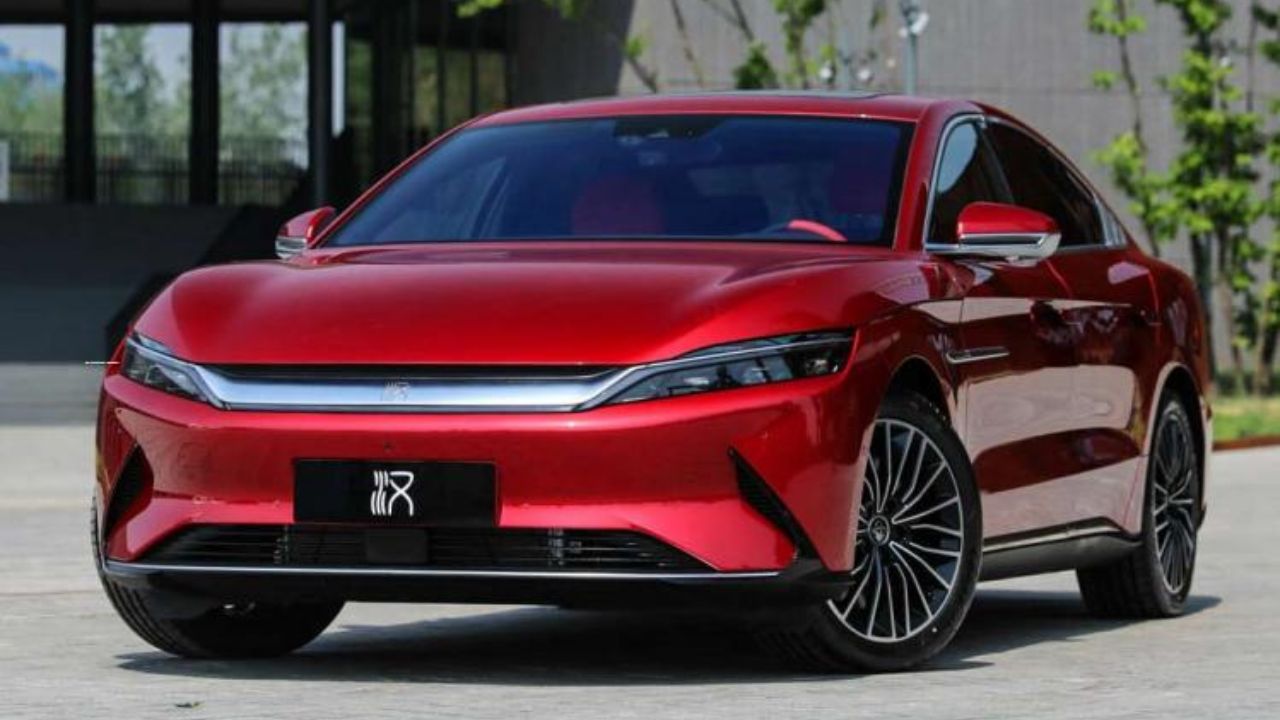
The BYD Han was introduced as a flagship sedan designed to compete directly with luxury EVs such as the Tesla Model 3, NIO ET7, and XPeng P7. Since its debut, the Han has been lauded for its premium build quality, strong performance, and impressive range—all while maintaining a price advantage over imported competitors.
The Han family includes:
- Han DM-i (Plug-in Hybrid Electric Vehicle)
- Han EV (All-Electric Vehicle)
- Han L EV and Han L DM (long-range and performance-oriented variants)
While the Han lineup recorded strong sales in 2023, the model’s performance in 2024 saw a notable decline due to intensifying market competition and consumer shifts toward newer models from other automakers.
Read Also: China’s Car Market Revs Up: New-Energy Vehicles Take the Lead in a Historic Shift
New Long-Range Variants: A Closer Look
Han DM-i (Hybrid Version)
Previously, BYD offered five Han DM-i variants, each with a CLTC-rated electric-only range of 125 km. The starting prices ranged from RMB 168,800 to RMB 225,800.
The new Han DM-i long-range editions retain the same efficient hybrid architecture but are optimized for greater battery efficiency, improved regenerative braking, and smoother power delivery. These enhancements make the Han DM-i more attractive for buyers seeking flexibility between electric and hybrid driving modes.
Han EV (All-Electric Version)
BYD’s flagship all-electric sedan, the Han EV, has been expanded with three new long-range variants:
- Two models with a CLTC range of 635 km
- One model boasting an impressive 705 km range
These variants are competitively priced:
| Variant | Range (CLTC) | Starting Price (RMB) |
| Han EV Long Range | 635 km | 183,800 |
| Han EV Long Range Plus | 635 km | 195,800 |
| Han EV Ultra Range | 705 km | 215,800 |
By comparison, the previous Han EV lineup included five variants with ranges between 506 km and 701 km, priced from RMB 179,800 to RMB 235,800.
This update indicates that BYD is offering greater range at lower or similar prices, a move that aligns with consumer expectations for value and innovation in the competitive EV market.
Limited-Time Offers and Pricing Strategy
To further entice buyers, BYD introduced a series of promotional incentives valid until October 31:
- RMB 10,000 trade-in subsidy for buyers of the new Han variants.
- An additional RMB 10,000 discount for customers purchasing the 506 km range Han EV, effectively reducing its starting price to RMB 159,800.
| Offer Type | Applicable Model | Discount (RMB) | Effective Starting Price (RMB) |
| Trade-in Subsidy | New Han DM-i / Han EV Variants | 10,000 | Varies by model |
| Trade-in + Final Payment Discount | Han EV (506 km) | 20,000 | 159,800 |
These discounts make the Han lineup one of the most competitively priced premium EV options in China’s mid-to-high-end segment.
BYD’s pricing strategy effectively positions the new variants as upgraded models with enhanced specs while phasing out older versions still listed in the specifications.
Features and Technological Enhancements
Both the Han DM-i and Han EV benefit from BYD’s latest blade battery technology, DiPilot intelligent driving system, and improved interior ergonomics.
Key Highlights Include:
- Blade Battery: Known for its superior safety, durability, and energy density, offering stable performance even under extreme conditions.
- Smart Cockpit 3.0: Enhanced infotainment system with voice control, AI-based navigation, and 4G/5G connectivity.
- DiPilot Driver Assistance Suite: Features adaptive cruise control, lane-keeping assist, and automatic emergency braking.
- Refined Interior: Premium materials, ambient lighting, and noise insulation for a luxury sedan feel.
- Improved Aerodynamics: Contributes to higher energy efficiency and range extension.
With these enhancements, BYD is not only improving range performance but also elevating the driving experience to meet global standards.
BYD’s Market Challenges and Strategic Response
Despite its innovation and early leadership in the EV space, BYD’s Han series sales have been under pressure in 2024 due to aggressive competition from brands like:
- Tesla (Model 3, Model Y)
- NIO
- XPeng
- Zeekr
- Leapmotor
According to data from CnEVPost, BYD sold 8,690 Han family units in September, representing a 64.57% year-on-year decline and a 6.95% drop from August.
From January to September 2024, total sales for the Han family reached 142,331 units, down 13.09% year-on-year.
| Time Period | Sales Volume (Units) | Year-on-Year Change |
| September 2024 | 8,690 | -64.57% |
| January–September 2024 | 142,331 | -13.09% |
These figures underscore the increasingly saturated EV market in China, where consumers are spoiled for choice and constantly seek models with longer range, advanced features, and competitive pricing.
Competitive Landscape
China’s EV sector has evolved into one of the world’s most dynamic markets. Local automakers like BYD face competition not just from Tesla but also from new Chinese brands offering cutting-edge technology at competitive prices.
BYD’s Key Competitors:
| Brand | Model | Range (km) | Starting Price (RMB) |
| Tesla | Model 3 | 606 | 245,900 |
| NIO | ET5 | 700 | 298,000 |
| XPeng | P7i | 702 | 249,900 |
| Zeekr | 001 | 750 | 269,000 |
| BYD Han EV | 705 | 215,800 |
BYD’s ability to offer comparable range and technology at a lower price point gives it a strategic edge. The newly launched Han variants reinforce that advantage by delivering more range for less money—a formula likely to resonate with middle and upper-middle-class buyers.
The Road Ahead for BYD Han
BYD’s latest updates to the Han lineup demonstrate the company’s commitment to maintaining competitiveness through innovation and customer incentives. The long-range variants are a direct response to shifting market demands where range anxiety and affordability remain key factors influencing purchase decisions.
BYD’s Blade Battery innovation continues to serve as a major differentiator, providing safety and reliability unmatched by many rivals. Furthermore, with ongoing upgrades in smart driving features and design, BYD aims to regain its momentum in 2025 and beyond.
Read Also: Tesla Model 2 2026: Everything We Know About Elon Musk’s Affordable EV
FAQs About BYD Han’s New Long-Range Variants
Q1. What is the driving range of the new BYD Han EV models?
The new Han EV variants offer ranges of 635 km and 705 km under the CLTC cycle, providing extended driving capability compared to earlier models.
Q2. What incentives are available for new buyers?
Customers purchasing before October 31 receive a RMB 10,000 trade-in subsidy. Select variants also qualify for an additional RMB 10,000 discount, reducing overall costs significantly.
Q3. What are the major differences between the Han DM-i and Han EV?
The Han DM-i is a plug-in hybrid offering the flexibility of both electric and fuel power, while the Han EV is fully electric with zero emissions and higher driving range.
Q4. Does the Han EV support fast charging?
Yes, the Han EV supports DC fast charging, allowing the battery to charge from 30% to 80% in approximately 30 minutes, depending on the variant and charger type.
Q5. How does the BYD Han compare to Tesla Model 3?
While the Tesla Model 3 offers a global brand image and slightly higher tech integration, the BYD Han EV provides better value for money, similar range, and a more spacious interior at a lower price point.
Conclusion
The BYD Han’s long-range variants mark an important step in the brand’s evolution and market strategy. By offering enhanced performance, improved range, and attractive pricing, BYD is making its flagship sedan more appealing to a wider audience.
While 2024 has been a challenging year for the Han family, these updates could revitalize demand and help BYD reclaim its position in the premium EV market. The combination of technological innovation, customer-centric pricing, and sustainability-focused design ensures that BYD remains a formidable force in China’s fast-paced electric mobility landscape.
3 thoughts on “BYD Expands Han Sedan Lineup with New Long-Range EV & Hybrid Models at Lower Prices”