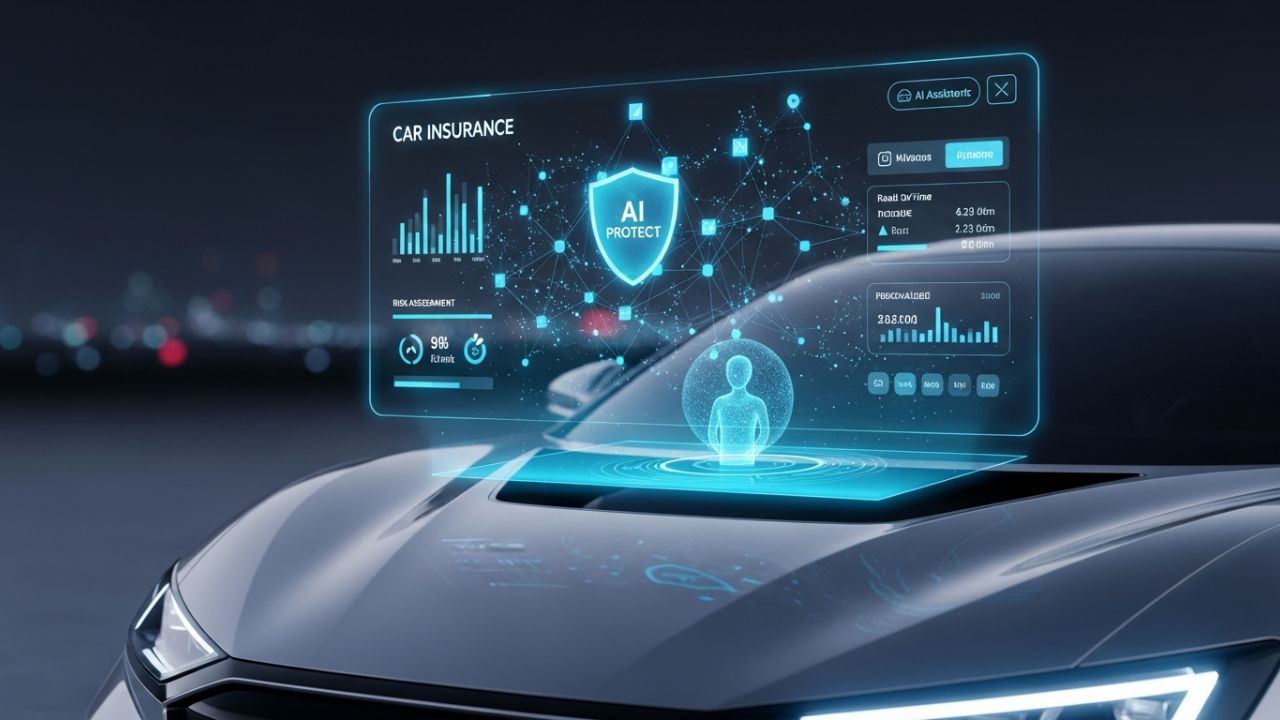
In the evolving world of auto insurance, AI-based car insurance uses smart driving data from telematics devices to personalize premiums, rewarding safe drivers with significant discounts. This usage-based insurance (UBI) model analyses real-time behaviours like speed and braking, potentially cutting costs by up to 40% for low-risk individuals.
Introduction to AI-Based Car Insurance
AI-based car insurance transforms traditional policies by leveraging artificial intelligence to process vast amounts of driving data. Unlike fixed-rate plans, it focuses on actual usage, making coverage fairer and more dynamic. Drivers benefit from lower premiums tied directly to their habits, while insurers gain precise risk insights.
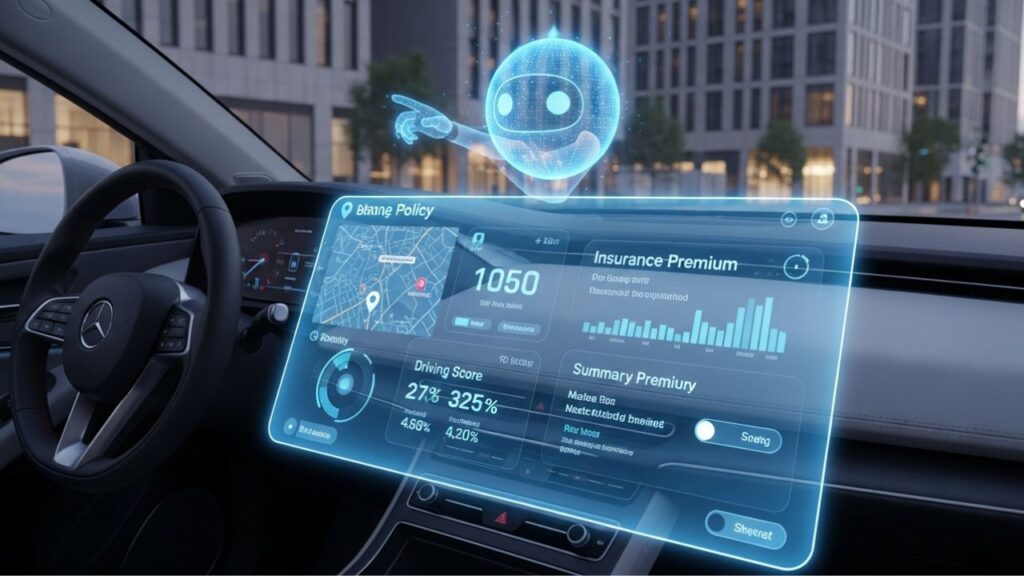
This approach integrates telematics—sensors in vehicles or apps on smartphones—to track metrics like mileage, acceleration, and cornering. AI algorithms then interpret this data to adjust rates in real time. In 2025, with connected cars proliferating, this technology is becoming mainstream, especially in markets like India where road safety varies widely.
The rise of AI addresses longstanding issues in insurance, such as overcharging safe drivers based on demographics. By focusing on behaviour, it promotes accountability and efficiency. Globally, adoption is surging, with projections showing UBI covering 30% of policies by 2030.
Read Also: Tech Innovations in Car Safety: New Sensors, AI, and Crash-Avoidance Systems
What is Smart Driving Data?
Smart driving data refers to information collected from vehicles about how, when, and where a driver operates their car. This includes GPS location, speed fluctuations, harsh braking events, and even time of day for trips. Telematics devices, often built into modern cars or added via OBD-II plugs, capture this without manual input.
AI processes this raw data using machine learning to identify patterns. For instance, frequent late-night drives might flag higher risk due to fatigue, while steady highway speeds suggest caution. In India, where urban traffic is chaotic, such data helps insurers differentiate skilled drivers from reckless ones.
Privacy-focused collection ensures only relevant metrics are shared, like acceleration without personal identifiers. This data fuels predictive models that forecast accident likelihood, enabling tailored premiums. As vehicles grow smarter, integration with onboard systems like ADAS (Advanced Driver Assistance Systems) enriches the dataset.
How Telematics Powers AI in Insurance
Telematics is the backbone of AI-based car insurance, acting as a bridge between vehicle sensors and AI analytics. It transmits data wirelessly to insurers, who use AI to score driving safety on a scale, often from 1-100. High scores translate to premium reductions.
The process starts with installation: a plug-in device or app activation. During drives, it logs events like sudden stops or rapid acceleration. AI then applies algorithms—such as neural networks—to weigh these against benchmarks. For example, avoiding phone distractions via integrated monitoring can boost scores.
In practice, companies like Progressive’s Snapshot program exemplify this. Users opt-in for 30-90 days of tracking, after which AI computes discounts based on low-risk patterns. In India, emerging providers are adapting this for local conditions, like monsoon-related risks.
This technology not only lowers premiums but also aids fleet management for businesses, reducing overall claims. AI’s role ensures data accuracy, minimizing human error in assessments.
Mechanisms for Lowering Premiums
AI lowers premiums by creating usage-based models where costs reflect actual risk, not assumptions. Safe driving—smooth acceleration, moderate speeds, and low mileage—earns discounts, sometimes up to 40%. Risky behaviors, like speeding, can increase rates, incentivizing improvement.
Telematics data feeds into AI-driven pricing engines that adjust policies monthly or in real time. For low-mileage drivers, pay-per-mile options can slash bills by 20-30%. In surveys, median savings hit $120 annually, with younger drivers seeing up to $245 off.
Insurers like Nationwide’s SmartRide use AI to reward gradual habits, such as consistent seatbelt use detected via sensors. This granular approach ensures fairness, as demographics like age become secondary. In India, where fuel costs are high, reduced driving data directly correlates to savings.
Dynamic adjustments mean premiums evolve with behavior changes, like post-training improvements. AI’s predictive analytics forecast long-term savings, encouraging policy renewals.
Examples of AI-Based Insurance Providers
Several global and Indian providers lead in AI-based car insurance, offering telematics-driven UBI. Progressive’s Snapshot in the US tracks via app or device, delivering average $231 discounts for safe users. Root Insurance goes further, basing entire policies on a 2-week trial, ideal for confident drivers.
In India, ICICI Lombard’s AI-enabled “Insure” app uses computer vision for inspections and telematics for renewals, processing 150-200 cars daily. It integrates Microsoft Azure for real-time claims, cutting processing from weeks to days. HDFC Ergo employs AI for personalized pricing, analyzing telematics to reward safe habits amid India’s diverse roads.
Acko, an insurtech pioneer, offers app-based UBI with AI chatbots for instant quotes based on driving data. Tata AIG and Bajaj Allianz are expanding telematics, with discounts up to 25% for low-risk profiles. Policybazaar aggregates these, helping users compare AI-enhanced plans.
These providers demonstrate AI’s scalability, from startups like Digit to giants like SBI General, all leveraging data for competitive edges.
Benefits of Smart Driving Data in Insurance
Smart driving data via AI offers multifaceted benefits, starting with cost savings for policyholders. Safe drivers save on premiums, with studies showing up to 25% reductions for fleets. This rewards responsibility, potentially lowering India’s high insurance costs tied to accidents.
For insurers, AI enhances fraud detection—analyzing claim photos for inconsistencies, saving millions annually. It streamlines underwriting, using data to assess risks faster than manual reviews. Claims processing speeds up with AI image recognition estimating damages in minutes.
Drivers gain insights too: apps provide feedback on habits, like braking tips, improving safety. Environmentally, it promotes efficient driving, reducing emissions. In business fleets, telematics cuts accidents by 30%, boosting loyalty through personalized services.
Overall, AI fosters a safer ecosystem, with personalized coverage like add-ons for high-mileage users. Customer satisfaction rises with 24/7 AI support, as seen in Salesforce-integrated systems.
Potential Risks and Privacy Concerns
While beneficial, AI-based insurance raises privacy risks from constant data collection. Telematics tracks location and habits, potentially exposing personal routines to breaches. In 2025, 81% of consumers worry about unintended data use, especially with AI’s opaque algorithms.
Covert tracking via apps can lead to bias if datasets reflect unfair patterns, like urban vs. rural driving disparities in India. Cybersecurity threats loom, with hackers targeting connected cars for data theft. Regulatory gaps exacerbate this, though GDPR-like rules are emerging.
Some drivers see premiums rise—24% in recent surveys—if data reveals risks, discouraging opt-ins. Insurers must ensure transparency, deleting data after 90 days as in PrePass models. Ethical AI governance is key to building trust.
Balancing innovation with consent, providers like Geotab emphasize opt-out options and anonymization. Still, vigilance against misuse remains essential.
Read Also: Used Car Loans vs. New Car Loans – Which Is Better?
Future Trends in AI Car Insurance
Looking ahead, AI car insurance will integrate with autonomous vehicles, using V2X (vehicle-to-everything) data for proactive premiums. Generative AI will simulate scenarios for hyper-personalized policies, like weather-adjusted rates in monsoon-prone India.
Real-time monitoring via edge AI will enable instant adjustments, with synthetic data addressing privacy by augmenting real datasets. Insurtechs predict continuous inspections, flagging maintenance issues to prevent claims.
In India, adoption will surge with 5G, enabling apps like Acko’s to offer micro-insurance for rideshares. Regulatory focus on fairness will mandate explainable AI, ensuring unbiased scoring. By 2030, UBI could dominate, slashing industry fraud by 50%.
Challenges like data equity will drive innovations, such as blockchain for secure sharing. Ultimately, AI promises equitable, efficient coverage, transforming insurance into a partner for safer roads.
Conclusion
AI-based car insurance harnesses smart driving data to democratize premiums, empowering safe drivers with savings and insurers with insights. As technology advances, it promises a future of personalized, secure coverage. Embracing it thoughtfully can revolutionize road safety and affordability worldwide.